
Perineal Injury Suturing Workshop
A single suture: better perineal wound healing and fewer complications

Content:
A perineal injury occurs in 85% of vaginal births, and 70% of these will need suturing.
Knowing which injuries need suturing, as well as the right suture material and the correct technique, can be decisive for a woman's recovery and adjustment to her new stage as a mother.
Methodology:
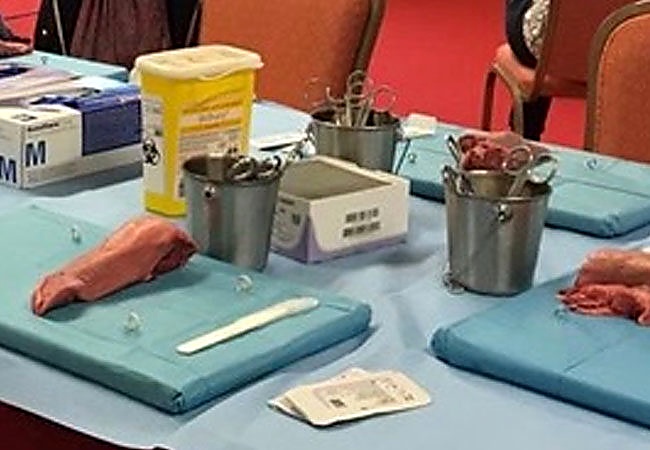
After a theoretical presentation of which injuries should be sutured and the best technique and suture material for healing, this will be practised on both obstetric simulators and animal tissue.
We will simulate a correct episiotomy and practise continuous and interrupted suturing techniques.
Objectives:
General:
- Acquire the theoretical and practical knowledge to recognise first- and second-degree perineal tears.
- Acquire the theoretical and practical knowledge to prevent perineal injuries by performing an episiotomy correctly.
Specific:
- Acquire the theoretical and practical knowledge to diagnose and repair first- and second-degree tears.
- Acquire the theoretical and practical knowledge to perform a correct episiotomy
- Acquire the theoretical and practical knowledge to repair an episiotomy or second-degree tear with a single suture
- Know the recommendations to improve healing of first-degree tears
Theory: 30 minutes
Diagnosis and repair of first-degree tears
Diagnosis and suturing of second-degree tears or episiotomy
Indications for and description of episiotomy
Complications
Which injuries should be sutured (first-degree, second-degree or episiotomy)
How to suture perineal injuries: continuous technique vs interrupted technique
Practice: 1 hour 30 minutes
Performing an episiotomy on a birth simulator
Performing an episiotomy on an animal model
Suturing a tear / episiotomy on an animal model with a single suture
Workshop available in: